Shivaji Maharaj: The Indomitable Warrior and Visionary Rule
Chhatrapati Shivaji Maharaj
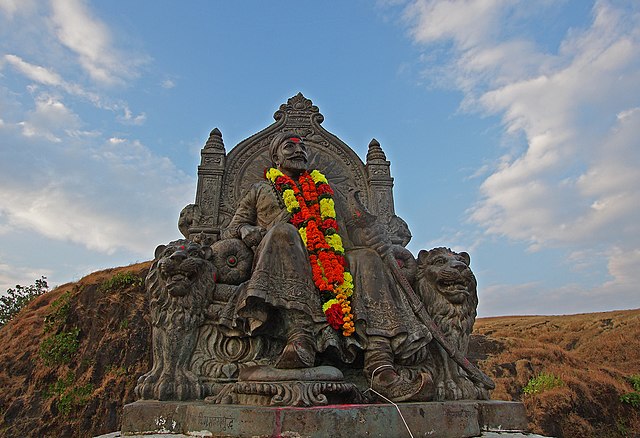
Early Life and Education
Shivaji Maharaj, born on February 19, 1630, at Shivneri Fort in Maharashtra, was one of the most significant figures in Indian history. He was the founder of the Maratha Empire and a visionary leader whose bravery, military strategies, and progressive governance changed the course of Indian history. Born to Shahaji Bhosale, a Maratha general under the Deccan Sultanates, and Jijabai Bhosale, who instilled in him the values of courage, honor, and duty, Shivaji’s early life was shaped by the ideals of freedom and respect for his motherland. Raised in the rugged terrain of the Western Ghats, Shivaji developed a sense of connection with his land, which was to become central to his aspirations of creating a strong and independent kingdom.
Shivaji's formative years were spent studying both the traditional values of Hindu culture and the military strategies required to succeed in an era dominated by the Mughal Empire. His mother, Jijabai, played a pivotal role in his education, nurturing his vision of establishing a kingdom that would resist the foreign invaders and ensure the welfare of his people. His early experiences, including the role of military training under the guidance of his father, shaped him into a determined and strategic warrior. At a young age, Shivaji displayed exceptional skills in martial arts, swordsmanship, and leadership, and he soon began taking steps to build his own kingdom.
The Rise to Power
Shivaji's rise to power began in the mid-17th century, when he started his campaign by capturing the Torna Fort in 1645 at the age of 15, marking his first major victory. This victory was the beginning of a series of military conquests that laid the foundation for the Maratha Empire. Over the years, Shivaji built a strong and disciplined army, adopting guerrilla warfare tactics that proved to be highly effective against the larger Mughal forces and other adversaries. His military genius was reflected in his ability to adapt to different environments, utilizing the geography of the Deccan Plateau and the Western Ghats to launch surprise attacks and launch hit-and-run operations. These tactics allowed him to outmaneuver his enemies and capture critical forts, towns, and territories, establishing his authority in the region.
Conflict with the Mughals
Shivaji's most significant military achievement came in 1665, when he took control of the Kalyan and Bhiwandi forts, two strategically important locations that solidified his power in the region. However, his growing power attracted the attention of the Mughal Emperor Aurangzeb, who sought to curb his expansion. The Mughal Emperor, who had ambitions of expanding his empire across India, saw Shivaji as a formidable opponent. In 1666, Shivaji was invited to the Mughal court in Agra, where he was imprisoned by Aurangzeb. However, Shivaji, with his keen intellect and strategic thinking, managed to escape from the Mughal prison in a dramatic and daring escape, disguised in a basket of sweets carried by his followers. This incident is often cited as one of the most remarkable episodes of his life and further enhanced his reputation as a master of strategy and cunning.
Following his escape, Shivaji’s resolve to establish a free and independent Maratha kingdom grew stronger. He continued to resist the Mughal empire’s attempts to overpower him. In 1674, Shivaji was formally crowned as the Chhatrapati (king) of the Maratha Empire in a grand coronation ceremony at Raigad Fort. This event was a momentous occasion that marked the establishment of a powerful and independent Hindu kingdom. His coronation was not just a personal triumph, but a symbol of his success in overcoming the forces that sought to subjugate the Maratha people and the entire Deccan region.
Governance and Administration
One of Shivaji Maharaj’s defining qualities was his ability to govern effectively and ensure the welfare of his subjects. His administration was marked by an efficient system of governance that balanced justice, military readiness, and economic prosperity. He set up a system of local governance in which officers were appointed to manage different regions of his empire, and he ensured that justice was served without bias or corruption. His tax policies were designed to be fair and considerate of the hardships faced by the common people. Unlike many other rulers of the time, Shivaji’s governance was based on the principles of justice and fairness, ensuring that his subjects could live in peace and prosperity.
Legacy and Influence
Shivaji Maharaj's leadership was characterized by his deep sense of responsibility to his people and his unyielding commitment to protecting the sovereignty of his kingdom. He constantly sought ways to improve his kingdom’s military strength, economic wealth, and social well-being. His emphasis on discipline, loyalty, and unity within his army made it one of the most formidable fighting forces in India. His ability to inspire his soldiers and motivate them to fight for the kingdom’s survival is one of the key reasons for the Maratha Empire’s resilience.
Shivaji Maharaj passed away on April 3, 1680, at the age of 50, leaving behind a flourishing empire and a legacy that would continue to shape Indian history for centuries. His death marked the end of an era, but his contributions to the Maratha Empire remained influential. After his passing, his son, Sambhaji Maharaj, succeeded him and continued his father’s work, but it was under Shivaji’s leadership that the Marathas became a force to be reckoned with on the Indian subcontinent.
Shivaji's Enduring Legacy
Shivaji Maharaj’s legacy lives on to this day. He is celebrated as a symbol of Hindu pride, national resistance, and the values of justice, bravery, and equality. Statues, books, films, and songs commemorate his life, and he is regarded as one of the greatest heroes in Indian history. His story continues to inspire people across the globe, not just for his military and administrative skills, but for his vision of a just and free society, where people of all backgrounds could coexist and prosper. Shivaji Maharaj remains an enduring symbol of leadership, courage, and selflessness, a true hero whose influence transcends time and borders.